Alpine Meadow
familiar wildflowers in the Canton of Valais

We wake from comfortable slumber to a melody of bells, resonating deeply like church Sunday, but too many and too chaotic to be Brother John sounding matins. Occasional foghorn-like bellowing accompanies the crescendo. A herd of cows cross beneath our little attic window in the pre-dawn hour, returning to the barn for their morning milking. We—on the other hand—return to bed.
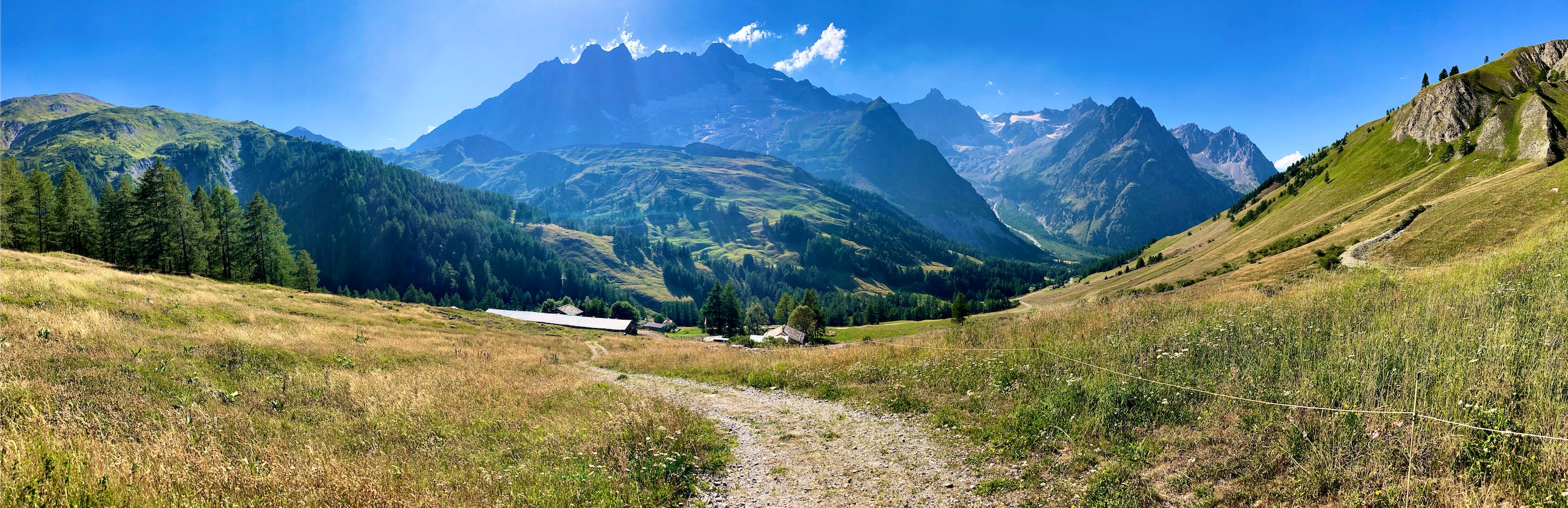
Dawn comes early at this latitude, but sunrise is late. When the sun finally peaks above the mountain to the Southeast, we venture outside to take in the scenery. A glacier still clings to the northern face of the mountain to our east, the melt racing down a steep rocky streambed. High up, visible only with binoculars, shepherd dogs mind their flock, on such as slope as I dare not go, except of course with skis.
As I walk around the shallower meadow, contemplating the plants that chance to escape the ravenous livestock, something surprises me: the plants are eerily familiar. Yarrow, bladder campion, bellflower, St. John’s wort, chamomile, borage, salsify, and dock—all plants I’ve read about in Sam Thayer’s books and in various herbals. But why should this be? Shouldn’t we expect to find all manner of Swiss or at least European species unknown to the American forager? Why do I find medicinal herbs in even greater abundance than back home?
This riddle is easily answered after a moment’s reflection. Our herblore stems mostly from Western sources. Many generations of Europeans honed and passed down the rules-of-thumb that tell us that salsify and bellflower are nourishing and that yarrow will heal a cut. Many of the most useful plants were intentionally imported to the New World by European settlers and has become naturalized in the Northeast. We know relatively little about the medicinal and culinary virtues of our native plants. With this in mind, it makes perfect sense that back in the Old World we would find the plants we know from Grimms fairytales, Greek legend, and herbal tomes.
Harebells

First some flashes of purple catch my eye. Delicate harebells are in bloom at all rock walls, road edges, and mossy patches. They closely resemble the harebell we have in the northeast (Campanula rotundifolia). The Latin name makes perfect sense: Campanula means ‘little bell’, while rotundifolia means ‘round’, referring to the small, round basal leaves no larger than a finger nail.
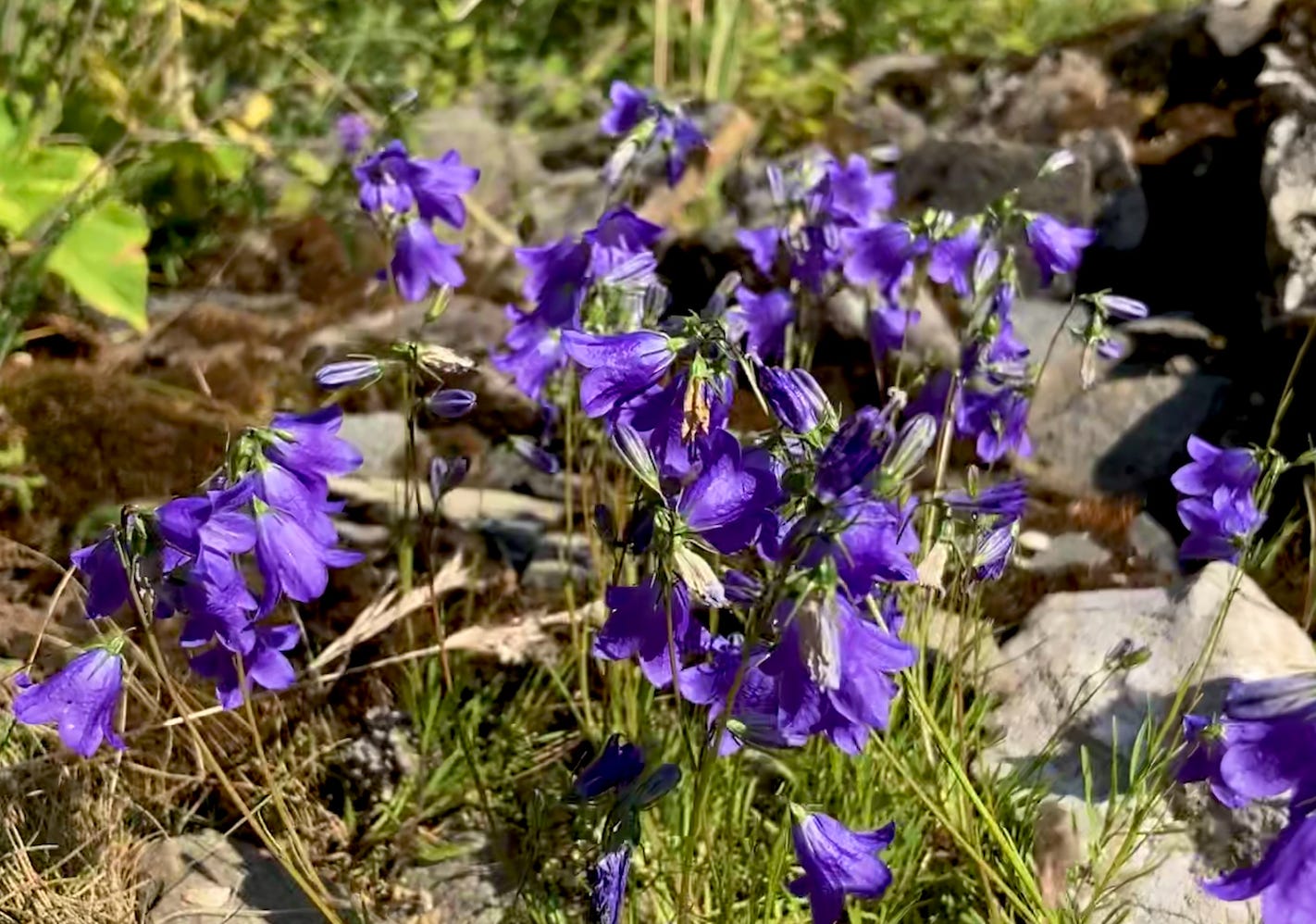
The harebell is closely related to the creeping bellflower (Campanula rapunculoides), the often cursed invader of gardens but lesser known as the origin of four vegetables. Harebells are also sister to rampion (Campanula rapunculus)—better known by its German name Rapunzel—which we know from a Grimm’s fairy tale by the same name as the vegetable that the loving husband stole from a sorceress’s garden to satisfy his pregnant wife’s cravings.
St. John’s Wort
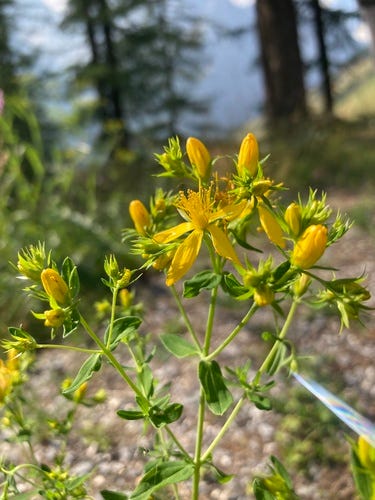
In a dry sunny spot alongside an access road, I spot a lanky small-leaved herb with bright yellow flowers. On a hunch, I crush a flower between my fingers. It instantly expresses a red fluid that stains my skin. This tells me it is Hypericum—St. John’s wort—an important anti-depressant in the German herbal canon.
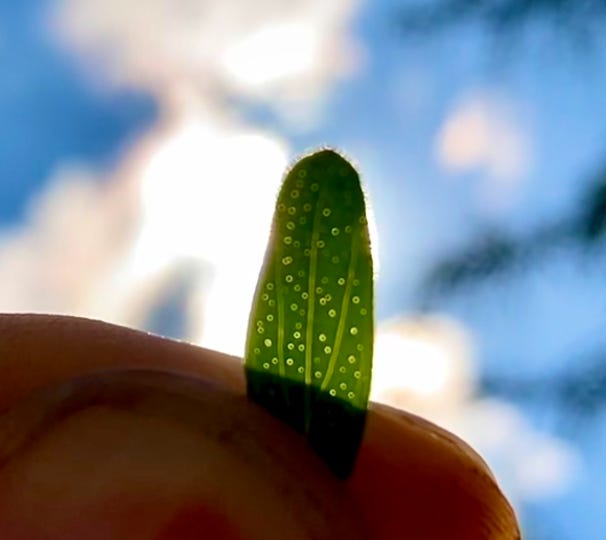
There are however several species of Hypericum, so I hold one leaf to the sun. Sure enough, it has many small perforations that confirm it is Hypericum perforatum, the species most prevalent in the USA.
American ranchers despise St. John’s wort—labeling it a noxious weed—because it has a photosensitizing effect on the cattle (and humans) who would eat it. But German doctors often prescribe it as a first-line treatment for mild depression. The use of this herb for treating mental health is apparently an old tradition, with the name Hypericum meaning “overcoming an apparition”.
Chamomile
We head over to the other side of the valley and take a bridge over that stream of fast-running glacial melt. On the bank I see a familiar friend from my garden: German chamomile (Matricaria chamomilla). Plucking a head and crushing it, I confirm that characteristic fragrance of chamomile tea.
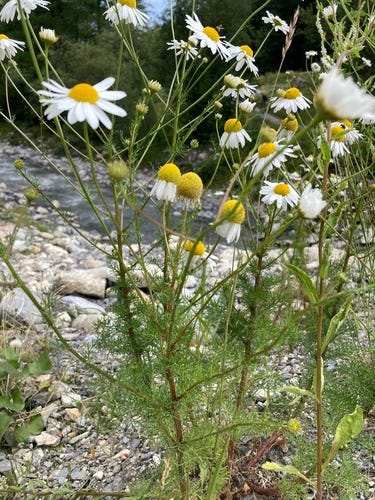
It is heartening to discover how portable botanical knowledge is. When we learn plants in one region, we actually learn quite a bit about the flora throughout the globe, particularly the other Northern temperate regions. What does not translate so well are rules of thumb for foraging. There may be toxic look-alikes over in Europe to plants we know in the USA. So before I’d eat or drink anything from another country I’d want to have the guidance of a trustworthy local herbalist!