An Herbal Party
mid-spring in my first-year herb garden

Growing an herb garden from seed is a bit like throwing a party. You can send out invitations, but you never really know who will turn up.
Party Prep
You clean your place up a bit. You’ve heard some of your guests have a tree nut allergy, so you check all the couches for the nuts that your buddy Hickory dropped into the cracks last year.1 You buy some shag rugs and comfy sofas in case some guests will stay overwinter. You send out about thirty invites and then anxiously await the arrival of the first dicotylous visitors.
First Guests Arrive
Your old high-school friend Camille is the first to show. She’s got a German accent, frizzy hair with split ends, and a subtle perfume that will lull you to sleep. She arrives early but won’t be staying the winter.
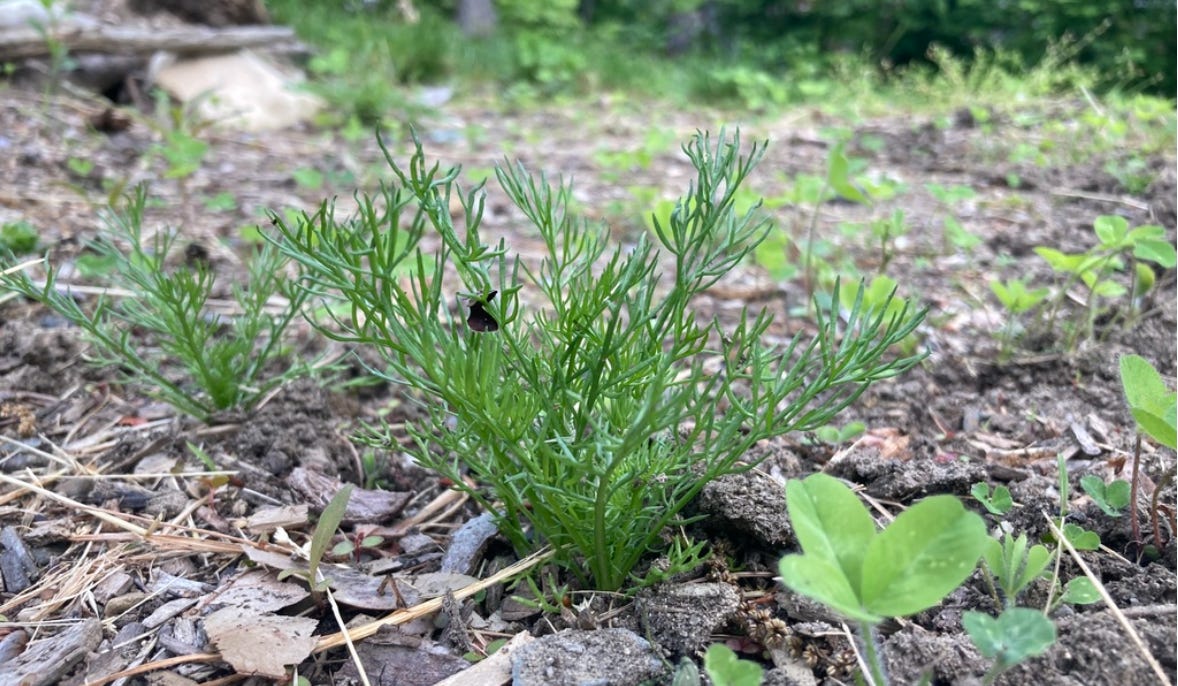
Next come a few other early birds like the ever punctual Monarde2, and that fashionable Poppy from California3 with the even more frazzly hair. Poppy’s not much of a drinker and hangs out upstairs with his sweetheart Annie4 (who you invited despite her sister Muggie being your sworn enemy).
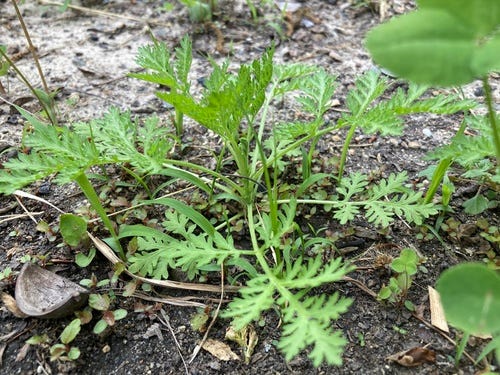
Guests on the Way
A few friends text, “I’m on my way”. Yeah, ok. They must just be a bit shy. Or maybe they were waiting for the heat to kick on.
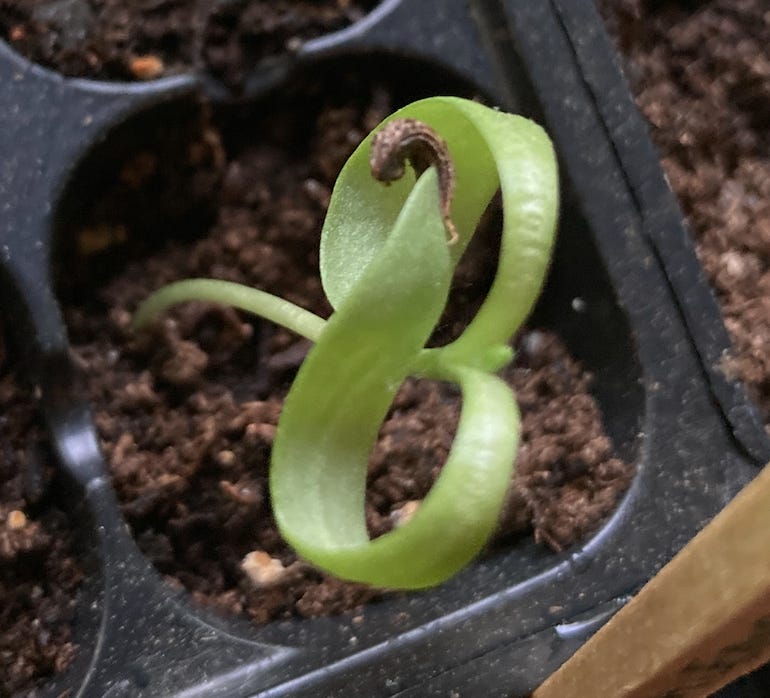
Cal makes quite the entrance, popping up out of nowhere, well-endowed with cotyledons, wearing her seed-coat like an earring.
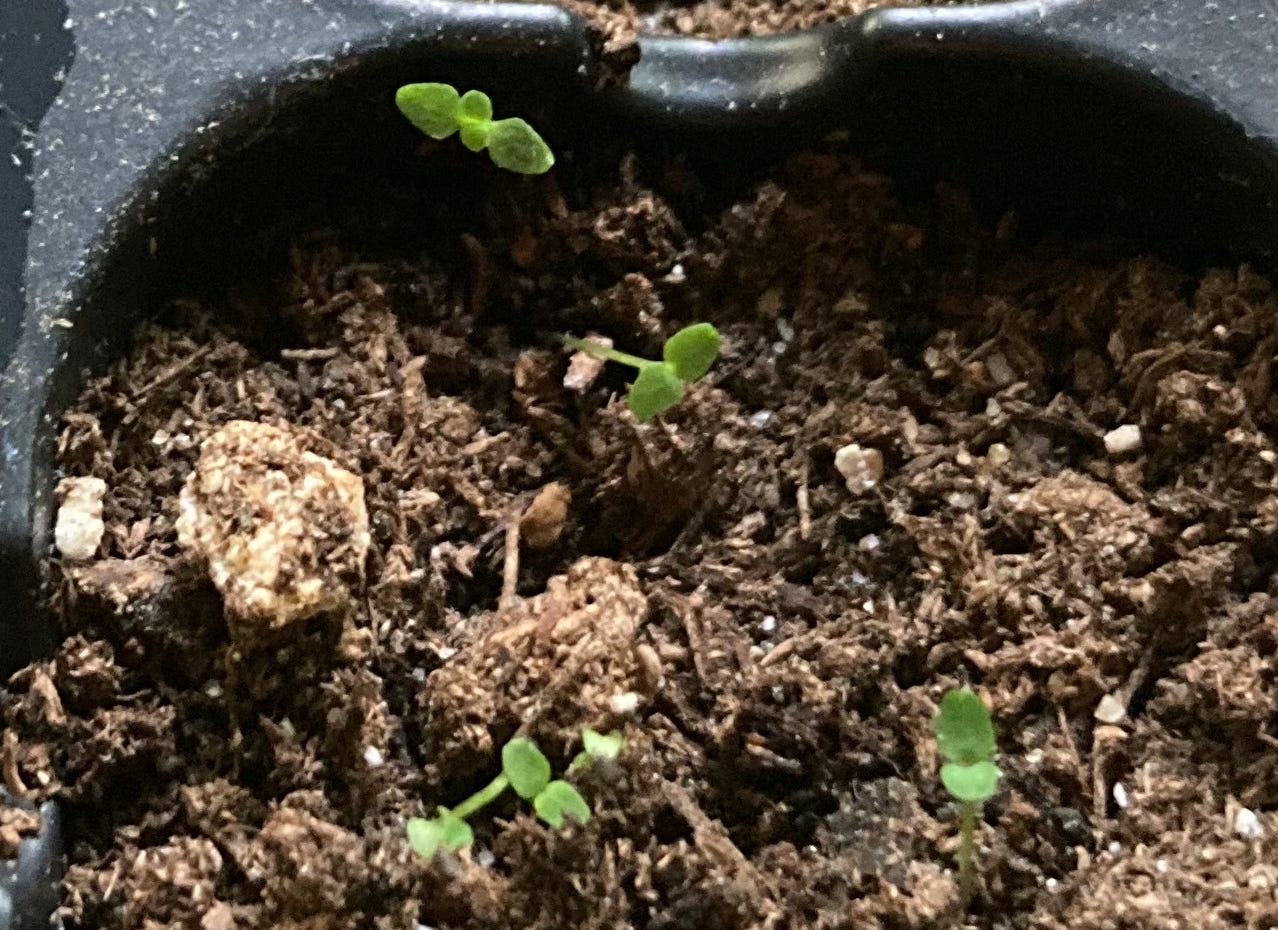
Helen5 arrives looking thirsty. She’s trailed by Fig6, Valerie7, Crys8, and that wild Basil9.
John is so meek that you might not even see him at first. But don’t let his saintly appearance fool you: he’s banned from parties in five states10 for inappropriate relationships with cattle.
You invited many others: Althaea and Amaranthus, Lobelia and Lyceum, Arnica and Asclepias, the Solomon brothers... No indication yet if they’ll make the trip this year.
Uninvited Guests
As you’re waiting for your last guests to arrive, it seems the whole neighborhood is showing up uninvited. There’s that chick Stella11 and her mousy cousin12. There’s Veronica13, the lady with the pink thumb14, and even the Shepherd15 and his lambs16. Thankfully they are all welcome and start mingling easily.
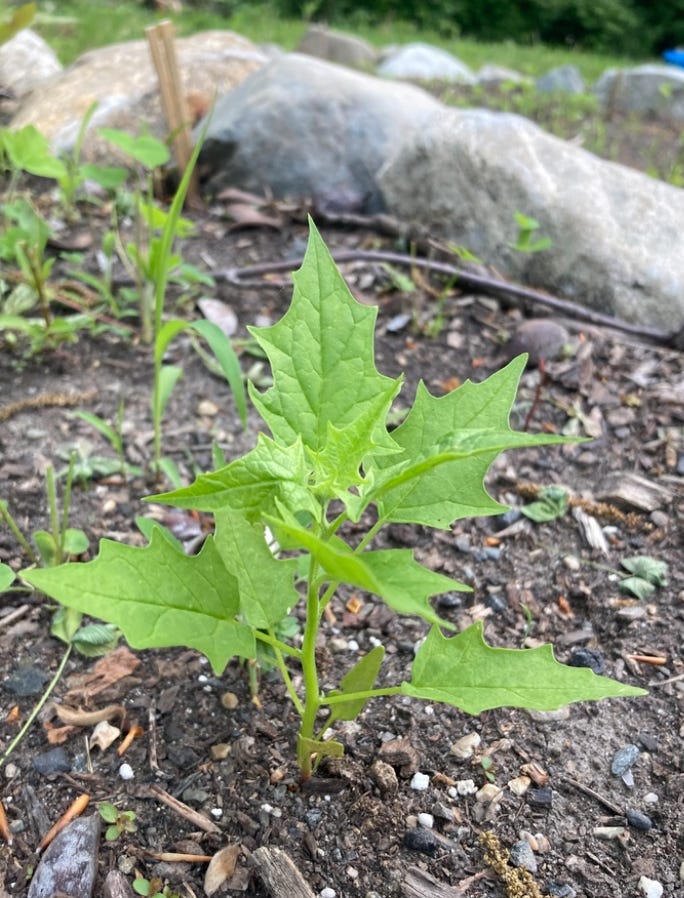
There’s of course those vagrants who show up, drink all your punch, and crash on your new couches—dreaming of the squatters’ life. There’s old Muggie, the Poh family17, and that guy with the garlic breath who scares away your invitees18. Better hire a bouncer!
Hickory (Carya spp.) is closely related to black walnut (Juglans nigra), both being in the Walnut tribe of the Walnut family. Black walnut products a chemical called juglone which both gives its heartwood that beautiful dark brown color and acts as an herbicide killing off competing plants when the walnut leaves and nut shells rot into the ground.

One study from the 80s claims to have found far less juglone in hickory than in black walnut, which makes sense given the lighter color of the hickory wood and the fact that hickory shells don’t blacken your fingers like walnuts and butternuts (Juglans cinerea) do. I’ve read that some plants like tomatoes and peppers are very sensitive to juglone, so it would make sense not to plant them under a hickory. My garden beds might be 10% hickory nut shells by mass, so it’s a good thing I’m not planting any tomatoes. The closest relative on my guest list is goji berry which is in the same subfamily (Solanoideae) with tomatoes (Solanum lycopersicum).
Spotted beebalm (Monarda puctata) is, as it’s name suggests, a pollinator attractant. But it also has traditional medicinal applications similar to wild bergamot (Monarda fistulosa).
California poppy (Eschscholzia californica) is an annual related to the opium poppy but does not contain morphine and the other opium alkaloids. My poppies are delighting in a bed of 50:50 sand and clay with minimal watering.
Sweet Annie (Artemisia annua) resembles mugwort (A. vulgaris) but has a pleasant potpourri aroma and no pesky rhizomes. I gathered some seeds from a favorite spot down in Cresskill between the abandoned railroad tracks and some piles of fill. I didn’t think the seeds were mature, but apparently they were!
According to legend, Elecampane (Inula helenium) first grew where Helen of Troy’s tears fell.
Figwort (Scrophularia nodosa)
Valerian (Valeriana officinalis)
Ox-eye Daisy (Chrysanthemum leucanthemum)
I found some wild basil (Clinopodium vulgare) last fall, under the eves of an autumnberry thicket, and brought back some seeds which germinated quite nicely. This is an interesting case of a species native to both North America and Europe, where the plants we have today are some mix of imported and native genetics.
St. John’s wort (Hypericum perforatum) is a valuable herbal anti-depressant—prescribed as first-line treatment for mild depression in Germany—but is considered a noxious weed in states with lots of cows and strong ranchers’ lobbies. Apparently the cattle eat the herb and become photosensitized—that is, they get a heck of a sunburn. Not the herb to brighten the mood of fair-skinned beach-goers, I suppose.
I’m glad to encourage Chickweed (Stellaria media) in the perennial beds. It provides some tasty greens in the spring, crowds out less desirable volunteers, and then dies back by summer without interfering with the perennials that have their energy stored underground and easily push through the ground-cover layer.
Mouse-ear chickweed (Cerastium spp.) seems to often co-occur with the closely related Stellaria species. Both are edible, though the mouse-ear chickweed is hairy and thus harder to clean.
Speedwells (Veronica) are reportedly edible though I’ve not dabbled.
Lady’s thumb (Persicaria longiseta) is supposedly edible. Again, I haven’t gone there.
Shepherd’s purse (Capsella bursa-pastoris) is one of the many edible mustards.
We got lots of volunteer lambs quarters (Chenopodium album), especially against the southern-facing walls of the house and shed. I was pleased also to find the maple-leaved species (Chenopodiastrum), apparently brought in with some topsoil. Lambs’ quarters are delicious. You can eat the whole plant when they are small. As they get larger their leaves remain soft and scrumptious. At maturity—if you can resist eating them that long—they produce a large number of small round seeds that resemble the grain of the sister species quinoa.
Grasses (Poaceae) are strong competition for many of my herbs. So weeding efforts are focused largely on preventing grasses from becoming established in the beds.
Garlic mustard (Alliaria petiolata)—like black walnut—produces an herbicide that can discourage the growth of other herbs.